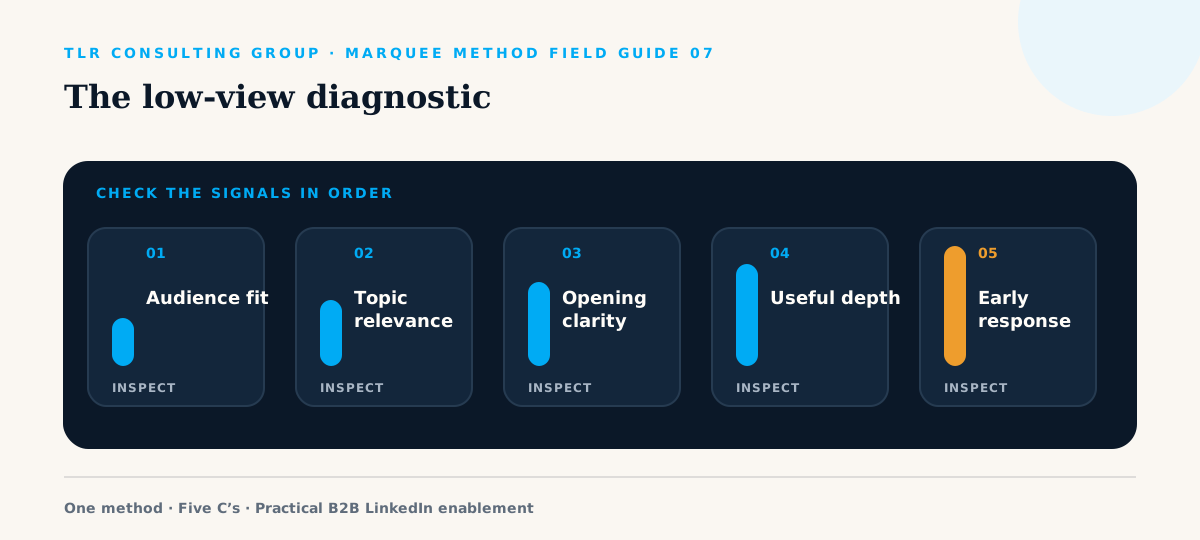
If your LinkedIn post views are low, the cause is rarely one secret algorithm rule. The author, network, topic, content quality, and member response all affect reach. Identify the weak link before changing five variables at once.
- Check whether the network contains the audience the post is for.
- Use post analytics to separate reach from relevance.
- Improve clarity and usefulness before changing format.
- Test one variable over several comparable posts.
How LinkedIn describes feed ranking
LinkedIn states that feed ranking uses hundreds of signals, including information about the post, the author’s profile and network, and member activity. Its relevance guidance also references content quality, freshness, conversations, and interaction behavior. Read LinkedIn’s explanation of how the feed ranks content and LinkedIn’s relevance and member-experience guidance.
That guidance rejects simplistic claims such as “links always kill reach” or “this exact character count determines distribution.” A tactic may correlate with a result in one dataset without being a universal rule. Diagnose your audience and content first.
Check network and topic fit
If the intended buyers are not meaningfully represented in your network, the first audience cannot validate the content. Review who has recently connected, who interacts, and which roles appear in audience demographics. A network full of peers may produce pleasant engagement while buyer reach remains weak.
Then test topic fit. Is the post about a problem the target reader currently owns? Is it written at the right level of sophistication? A broad motivational lesson may attract broad attention but fail to earn relevance among operations, finance, or procurement leaders.
Check the first-screen promise
The opening should help the right reader recognize the subject and reason to continue. Clarity beats suspense when the audience is busy. Name the tension, show a surprising observation, or state the useful outcome. Then deliver the promised value without making readers excavate it.
Scan the post on a phone. Long setup, abstract phrasing, and repeated throat-clearing increase effort. LinkedIn’s relevance system considers how members interact with content; the human translation is to make the post worth attention quickly.
Check substance, format, and conversation
One central idea with concrete detail usually beats several shallow ideas. Add an example, distinction, sequence, or decision rule. Choose the format that clarifies the idea. Monthly format trends should not control the decision.
Respond to substantive comments and participate in related conversations before and after publishing. Do not manufacture activity. LinkedIn’s March 2026 feed update says LinkedIn is reducing generic, recycled material and taking action against automated comments and engagement pods.
Run a controlled four-week test
Use LinkedIn’s post analytics documentation to compare posts on impressions, members reached, engagement, and available audience demographics. Group comparable topics and hold cadence roughly steady. Test one variable at a time: audience-specific topic, clearer opening, stronger example, or different format.
| Signal | Likely issue | Next test |
|---|---|---|
| Low reach, strong engagement | Network size or relevance | Add relevant connections and repeat the topic |
| Reach, weak dwell/response | Opening or substance | Clarify promise and add evidence |
| Peers engage, buyers do not | Audience or topic mismatch | Write to a buyer-owned decision |
| One post drops | Normal variation | Do not overreact; compare a series |
For a symptom-by-symptom path, open the Marquee Diagnostic.
Separate reach, relevance, and response
Low impressions describe distribution. They do not explain whether the right people saw the post or whether the idea was useful. Review members reached, in-network and out-of-network distribution, available demographics, profile activity, saves, sends, comments, and link visits.
A post with modest reach and several target-buyer saves may be more valuable than a broad post that attracts no relevant action. LinkedIn’s current post analytics documentation explains that impressions and members reached are different measures and that the analytics are estimates.
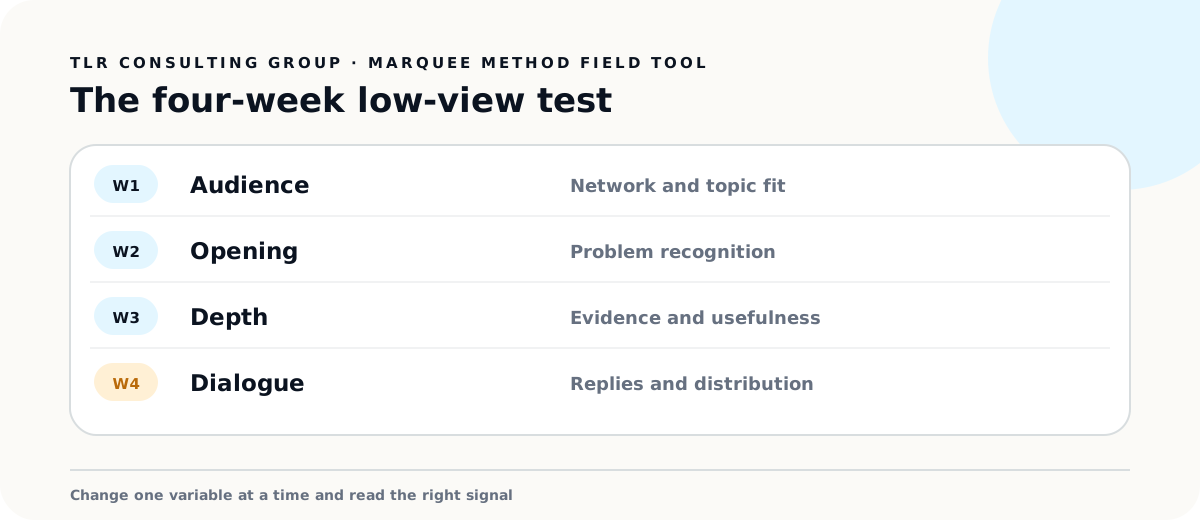
Change one variable across four weeks
Keep topic territory and cadence stable. In week one, publish an audience-specific problem with clear language. In week two, improve only the opening. In week three, add stronger proof or a worked example. In week four, spend time responding to useful comments and participating in relevant conversations before and after publication.
Use at least two comparable posts for any conclusion. One post can be affected by timing, topic, network activity, or random variation. Record the change, expected result, observed result, and next decision in a simple experiment log.
Diagnose with patterns, not folklore
| Observed pattern | Likely issue | Next test |
|---|---|---|
| Low reach, strong saves | Distribution or network fit | Relevant participation and network |
| Reach, weak dwell signals | Opening or audience mismatch | Sharper problem recognition |
| Comments, no profile activity | Broad topic or weak relevance | Narrow the buyer situation |
| Profile views, no conversations | Credibility or next-step gap | Audit profile and follow-up |
Use LinkedIn’s documented ranking factors
LinkedIn’s current feed-ranking explanation says ranking considers hundreds of signals from the post, profile, network, and activity. LinkedIn’s relevance guidance describes quality, freshness, conversations, and member behavior. Neither source promises a single posting formula.
Build a content system around audience relevance, substantive ideas, credible authors, and real participation. Avoid automation or engagement schemes that make the data easier to inflate and harder to trust. The goal is to learn which ideas earn attention from the intended market.
Keep a post experiment log
For each test, record the audience, topic, author, format, publication date, variable changed, expected result, and observation window. After the window closes, capture members reached, audience evidence, saves, sends, substantive comments, profile activity, and conversations. Include the post link and a screenshot of the analytics.
Write one interpretation and one alternative explanation. For example: “The stronger opening may have improved reach, although the author also received a partner mention that week.” This habit prevents false certainty.
Make a decision only after a pattern appears across comparable posts. Keep, adapt, or reject the change. Do not stack several new tactics into the next post, because the team will lose the ability to learn what mattered.
Frequently asked questions
Why did my LinkedIn views suddenly drop?
One post or one week can vary. Compare a series and check topic, audience, timing, format, and analytics before concluding that the account is penalized.
Do external links reduce LinkedIn post views?
LinkedIn does not publish a universal penalty rule. Use links when they serve the reader and judge the result across comparable posts.
Should I delete and repost a low-performing post?
Usually no. Learn from the result and improve the next post. Reposting the same material can create a poor reader experience.
Research and method: This guide separates documented platform features and cited research from the operating recommendations used in The Marquee Method. LinkedIn analytics are estimates, research findings describe their stated samples, and platform features can change. Review the linked primary sources before implementing account-specific workflows.
Put it into practice
Stop guessing which part of the system is weak.
The Marquee Diagnostic maps your symptom to the most defensible first cause and next action.
Run the diagnostic