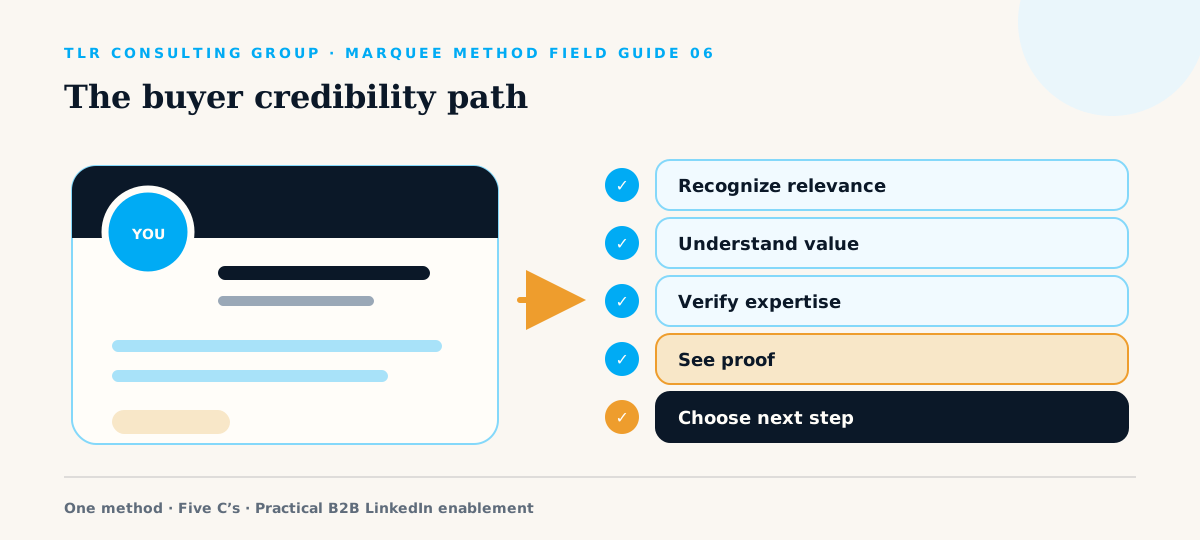
LinkedIn profile optimization for B2B sales is not cosmetic. A profile is often the proof layer between an invitation, comment, post, or email and a buyer’s decision to engage. Its job is to answer five questions quickly: Who is this person? Do they understand my world? Can they help? Is there evidence? What should I do next?
- Write for the buyer scanning the profile.
- Lead with relevance, not internal title language.
- Use proof that a seller can legitimately claim.
- Standardize the logic while preserving each person’s voice.
Audit the profile as a buyer journey
Open the profile as if you had just received an invitation from a stranger. The photo, banner, headline, current role, and first lines of the About section form the first screen. If that screen only repeats a job title and company slogan, the buyer has to infer relevance. LinkedIn’s invitation guidance recommends a recognizable profile and context when building quality connections.
Profile optimization matters when credibility is the constraint. It does not fix low posting discipline or poor message context by itself. Use the Marquee Diagnostic to identify whether the profile is the first cause.
Write a headline that signals relevance
A useful headline combines role or expertise, audience, and problem territory. It should remain accurate and human. “Enterprise Account Executive at Acme” is clear but incomplete. “Helping food manufacturers reduce unplanned downtime | Enterprise AE at Acme” gives the right reader context.
Avoid inflated labels and keyword piles. The headline appears in comments, search results, and invitations; clarity at small size matters more than a clever full sentence.
Make the About section useful evidence
The About section should not be a corporate press release. Open with the buyer’s situation, explain the problems the seller helps solve, show how they think, and add credible proof. Close with a low-pressure next step.
- Buyer situation
- Relevant problems
- Point of view
- Experience or proof
- Human detail
- Appropriate next step
Use first person. A seller can be polished without sounding like legal and marketing wrote a biography about them.
Use experience and proof carefully
Experience descriptions can show scope, outcomes, industries, and responsibilities without exposing confidential customer details. Add public assets, presentations, approved case material, or useful company resources where current LinkedIn features and account access permit.
Do not rely on outdated checklists that assume every member has every profile feature. LinkedIn changes availability by plan and region. Focus first on the universally visible story: headline, About, experience, activity, recommendations, and consistent contact information.
Scale quality without cloning the team
Create a profile architecture and examples, not a fill-in-the-blank script. Standardize the buyer questions each section must answer, approved proof sources, brand assets, and review process. Let individuals choose language and examples that match their role.
Review the profiles in pairs. Ask whether the page is credible, specific, and easy to understand. Then test outcomes: invitation acceptance, relevant profile views, inbound connections, and message replies. A Credibility-focused Team Workshop can update profiles while teaching the reasoning behind them.
Run a five-second and a two-minute audit
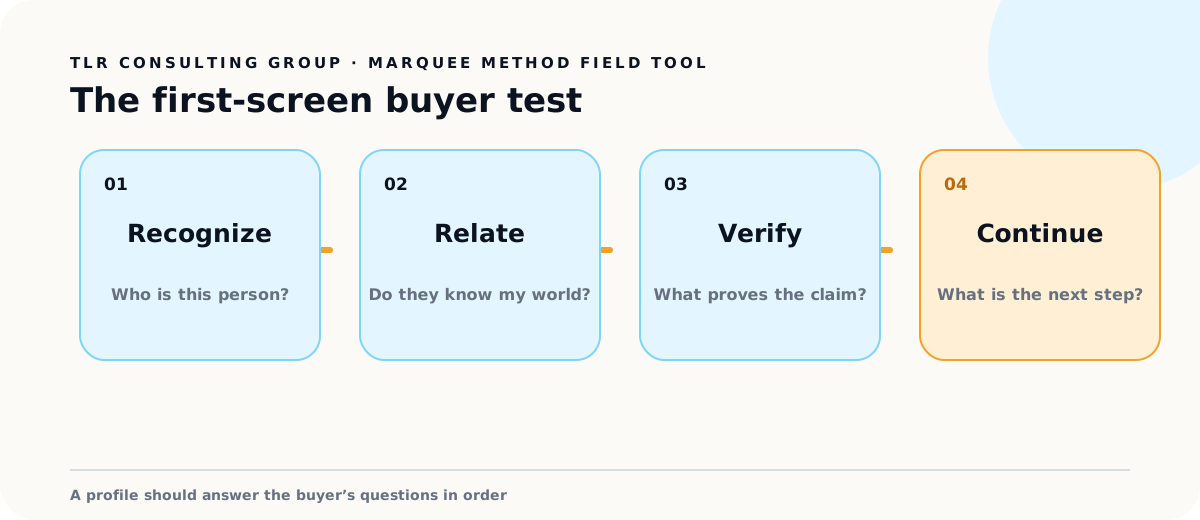
The five-second audit checks the photo, banner, headline, current role, and opening lines. A buyer should recognize the person, their area of work, and the audience they understand. The two-minute audit checks the About section, experience, activity, proof, and next step.
Ask a colleague outside sales to perform both audits without coaching. Record what they believe the person does, who they help, and what evidence they remember. Confusion in the test is more useful than internal debate about preferred wording.
Create a claim-to-proof map
| Profile claim | Useful proof | Weak substitute |
|---|---|---|
| Understands the industry | Specific decisions and experience | “Industry expert” label |
| Can improve an outcome | Approved result with context | Unsupported superlative |
| Has a useful point of view | Strong posts or presentations | Company slogans |
| Works well with customers | Relevant recommendation | Generic skill endorsements |
Every important claim should have a nearby proof source. Remove claims that the person cannot support publicly.
Use current platform signals carefully
LinkedIn’s profile search appearances documentation explains that members can review search appearances, the companies and job titles of searchers, and profile engagement where available. LinkedIn’s people-search relevance guidance warns that people-search results are personalized and that adding more keywords does not automatically improve ranking.
Use natural language that accurately describes the person’s expertise. Track whether the right roles find and visit the profile. Treat search movement as directional evidence because the result order depends on the searcher’s context.
Standardize quality without cloning voices
Give the team a profile brief with buyer questions, approved proof sources, disclosure rules, and examples from several roles. Let each seller choose the language and experience that represent them. A technical seller may lead with implementation risk; an account executive may lead with the business decision.
Review in pairs against one rubric: recognizable, relevant, specific, supported, and easy to act on. Recheck invitation acceptance, profile views, searcher roles, and reply quality after six weeks. Profile work should improve credibility at moments where the buyer already encounters the person.
Use the team profile review worksheet
Score each profile from one to five on recognition, relevance, specificity, proof, and next-step clarity. Review the first screen without scrolling, then the complete buyer path. Every score requires a short reason and one improvement.
Ask the seller to highlight every claim in the headline and About section. Next to each claim, write the evidence a buyer can verify on the page. Add one approved example, recommendation, project, article, or result where proof is thin. Remove any claim that relies on an inflated label.
Repeat the review after six weeks using invitation results, profile activity, searcher roles, and message replies. Keep changes that improve the right buyer behavior, even if the wording is less fashionable.
Frequently asked questions
What should a sales LinkedIn headline include?
Include the person’s role or expertise, the audience they work with, and the problem territory they understand, using accurate and readable language.
Should every seller use the same banner and About copy?
A shared banner can reinforce the company, but identical About copy suppresses credibility. Standardize structure and proof rules, not personal voice.
How often should profiles be updated?
Review profiles at least twice a year and whenever the role, audience, offer, proof, or company positioning changes.
Research and method: This guide separates documented platform features and cited research from the operating recommendations used in The Marquee Method. LinkedIn analytics are estimates, research findings describe their stated samples, and platform features can change. Review the linked primary sources before implementing account-specific workflows.
Put it into practice
Make every seller’s profile pass the buyer test.
A focused Team Workshop gives your people the architecture, examples, and live practice to improve credibility.
Explore Team Workshops