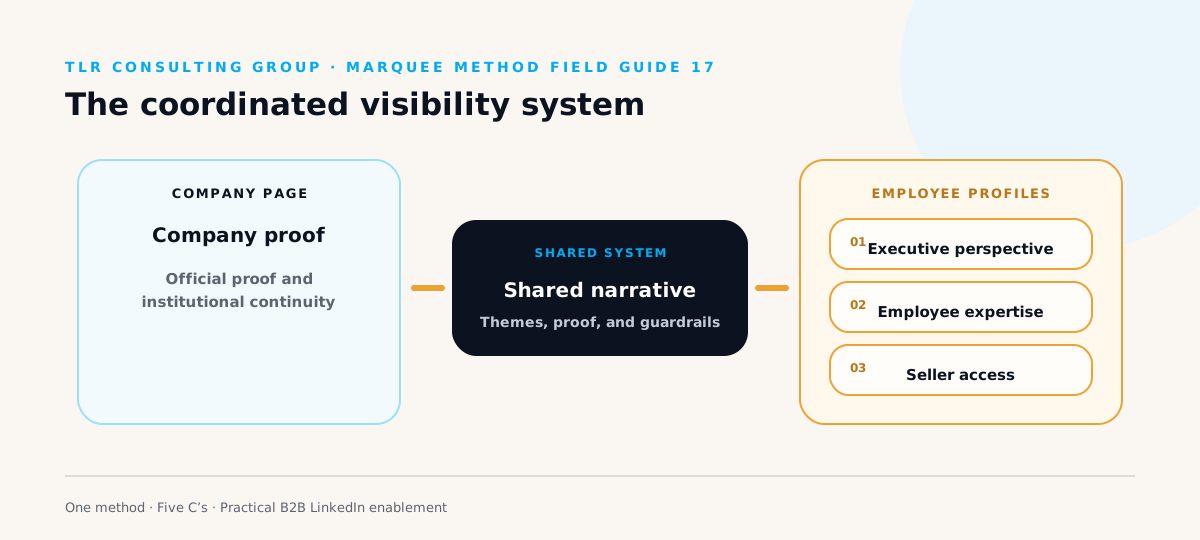
The LinkedIn company page versus employee profiles is not an either-or choice. The company page is the official institutional presence. Employee profiles carry individual expertise, relationships, and dialogue. B2B visibility becomes stronger when the page supplies proof and the people supply perspective.
- Use the company page for official proof and continuity.
- Use people for expertise and professional dialogue.
- Coordinate themes without copying posts.
- Measure each surface against its job.
Give the company page a clear job
The page should make the company understandable and verifiable. Publish product and company news, customer-approved proof, employer information, event material, useful research, and important official statements. Keep positioning, imagery, and basic information current.
The page also creates source material employees can interpret. A research report can become an executive point of view, a technical explanation, a seller’s customer question, and a customer-success lesson without everyone reposting the same caption.
Give employee profiles a human job
Employees can explain how work gets done, what decisions matter, what they are learning, and how they see the market. Their networks and activity reflect real professional relationships. That makes profiles well suited to dialogue and earned credibility.
LinkedIn’s guidance on employee thought leadership argues for moving beyond simple amplification toward employee thought leadership. The implication is not that every employee must become a creator. It is that expertise should not be reduced to copying company distribution.
Coordinate one narrative without cloning voices
Choose shared market themes and proof sources. Brief employees on the evidence, audience question, and any guardrails. Then let each role interpret the theme from its experience. An operations leader, engineer, salesperson, and CEO should not sound identical because their access and responsibility differ.
One company research report can produce an official summary, an executive implication, a technical methodology note, a seller’s buyer checklist, and employee discussion prompts.
Avoid the repost trap
Occasional reposting is appropriate, especially for major news. A program built mainly on reposts trains employees to wait for marketing and gives followers little additional value. Add context: why the announcement matters, what the employee learned, what changed, or which customer question it answers.
Measure page performance by official reach, followers, site actions, and campaign goals. Measure employee participation by audience relevance, dialogue, profile behavior, and business influence. Do not force the two surfaces into one metric.
Build a coordinated monthly workflow
Marketing can share upcoming themes, evidence, assets, and safe-use notes. Executives and experts can add ideas from current work. Sellers can identify buyer questions and account signals. At month-end, review which narratives reached the right people and which created conversations.
Use the B2B LinkedIn content strategy to design the editorial system, then the employee advocacy guide to build participation.
Assign each channel a job
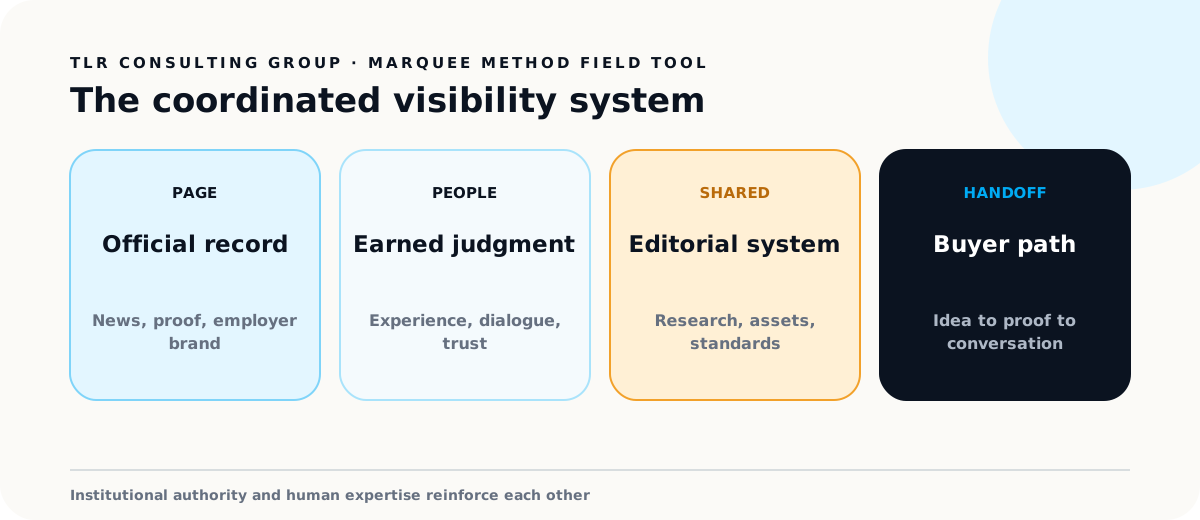
The company page carries official announcements, employer information, campaign assets, product news, and institutional proof. Employee profiles carry personal experience, practical judgment, professional relationships, and dialogue. Both can publish useful ideas, but the speaker changes how the reader interprets them.
Write a channel charter. Define which subjects belong primarily to the Page, which belong with executives or experts, and which benefit from coordinated treatment.
Use one idea across distinct contributions
For a product launch, the Page can publish the official announcement and evidence. An executive can explain the market decision. A product leader can discuss a tradeoff. A seller can connect the issue to buyer questions. A customer leader can explain adoption considerations without exposing confidential details.
These are related contributions, not copied versions of one caption. The audience gains a fuller understanding because each person has a different right to speak.
Build a shared editorial service
| Shared input | Page use | Employee use |
|---|---|---|
| Research | Official market perspective | Role-specific interpretation |
| Customer proof | Approved case | Personal lesson within permission |
| Event | Program and recap | Questions and observations |
| Company news | Authoritative record | Why it matters in the person’s work |
Measure the channels by their jobs
For the Page, track follower quality, content reach, engagement, link activity, talent response, and campaign outcomes. For people, track relevant audience, saves, sends, profile activity, conversations, and influence. Avoid a direct reach contest because the channels have different roles and distribution conditions.
LinkedIn’s current post analytics documentation documents member-level post measures. LinkedIn’s Page analytics documentation should guide Page reporting, while the 2025 Edelman–LinkedIn B2B Thought Leadership Impact Report supports the value of expert thought leadership across a buying group.
Create a channel assignment brief
For each campaign or market idea, complete five fields: official fact, expert interpretation, employee relevance, buyer question, and proof. Assign the company Page, executive, subject expert, seller, or another employee only where that speaker has a legitimate role.
Specify what must remain consistent, such as facts, dates, product names, and approved claims. Then specify where contributors have freedom, such as examples, implications, tone, and professional judgment. This avoids copied captions without creating factual drift.
After publication, compare channel performance against its job. The Page may create official reach and site action. An expert may create saves and technical questions. A seller may create account dialogue. Bring the evidence together at the narrative level.
Review one campaign from the buyer’s point of view. Can a reader move from an employee’s interpretation to the official proof and back to a credible person for questions? Repair broken links, conflicting facts, and generic destinations before increasing distribution.
Frequently asked questions
Are employee profiles better than a LinkedIn company page?
They are better for some jobs, such as individual expertise and dialogue. The company page remains important for official proof, campaigns, jobs, and institutional continuity.
Should employees repost every company post?
No. Use selective reposts and encourage employees to add role-relevant context or create an original interpretation when appropriate.
Who should own the combined strategy?
Marketing or communications can coordinate, but sales, executives, experts, HR, legal, and managers should help define inputs, guardrails, and outcomes.
Research and method: This guide separates documented platform features and cited research from the operating recommendations used in The Marquee Method. LinkedIn analytics are estimates, research findings describe their stated samples, and platform features can change. Review the linked primary sources before implementing account-specific workflows.
Put it into practice
Connect the brand page to the people buyers trust.
The Marquee Program installs one method across executives, employees, sellers, and marketing.
Explore The Marquee Program