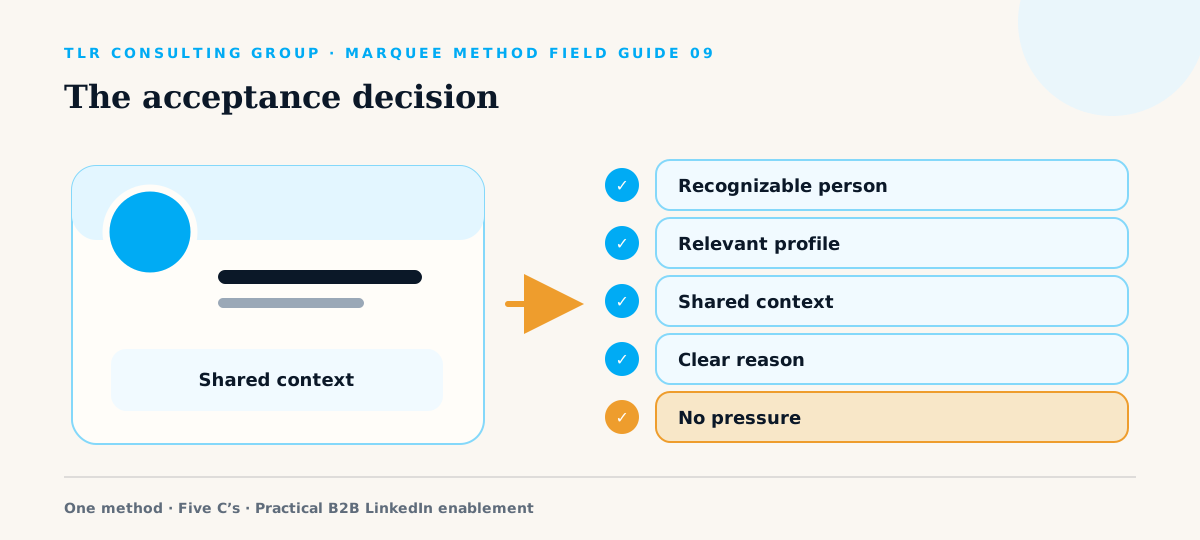
A low LinkedIn connection request acceptance rate is not primarily a copywriting problem. The recipient evaluates the person, relevance, context, and perceived risk in seconds. Better targeting and credibility usually matter more than finding a clever invitation template.
- Send fewer, more relevant requests.
- Make the profile credible before outreach.
- Use genuine context when a note helps.
- Treat ignored invitations as diagnostic data.
Understand why people decline or ignore
Recipients ask: Do I recognize this person? Are they relevant to my work? Does the profile look credible? Is this likely to become an immediate pitch? If the answers are unclear, ignoring the request is rational.
LinkedIn’s invitation guidance says excessive invitations, many ignored or pending requests, suspected automation, and spam reports can trigger restrictions. LinkedIn recommends context, personalization, a recognizable profile, and quality connections. Those are good relationship practices as well as platform hygiene.
Fix targeting before invitation copy
Define the audience by role, industry, problem, account, geography, and reason to know each other. Build smaller lists tied to an active business thesis. You might focus on operations leaders attending the same event or procurement professionals discussing a relevant regulation.
Do not connect solely because someone matches a title filter. Look for contextual relevance: a shared group, mutual contact, event, public comment, customer ecosystem, location, past company, or subject both people work on.
Make the profile pass the trust check
Before scaling invitations, improve the first screen of the profile. Use a current photo, clear headline, accurate company and role, buyer-relevant About section, and visible activity that shows professional judgment. The profile should make the invitation unsurprising.
If acceptance is low across several carefully targeted segments, compare profile variants or run the sales profile checklist before rewriting notes.
Write invitation notes with useful context
A useful note is brief and honest. Name the shared context, the relevant subject, and a low-pressure reason to connect. Do not pretend familiarity, overpraise a post you did not read, or compress a sales pitch into the invitation.
“Hi Maya, we both work with multi-site operations teams, and your point in the maintenance discussion matched what I’m seeing. I’d be glad to stay connected.”
A note is unnecessary when the relationship is obvious. Personalization should improve clarity rather than add forced detail.
Review acceptance by segment and source
Track requests sent, accepted, pending, and withdrawn by audience segment and context source. Compare warm contexts with cold searches. Do not chase a universal benchmark; compare your own cohorts and protect account quality.
If one segment accepts but does not engage, relevance may be superficial. If a segment ignores requests but responds to comments, build familiarity publicly first. Connection building is not a volume race; it is the foundation for the content and conversations that follow.
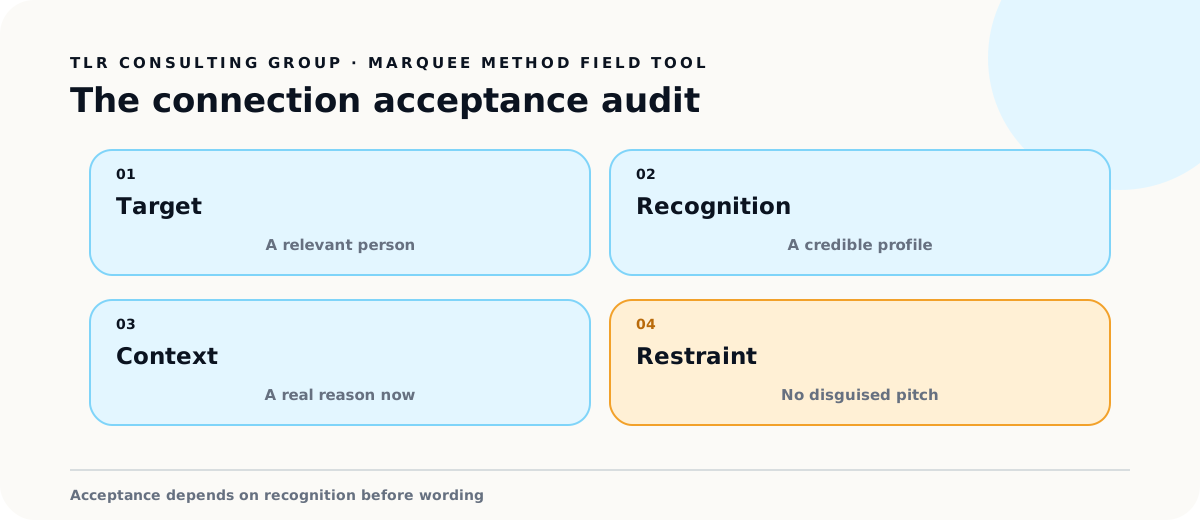
Audit the sample before rewriting the note
Review 50 to 100 sent invitations by role, company type, relationship distance, trigger, use of a note, and outcome. A low overall rate may hide a strong rate with relevant second-degree buyers and a weak rate with broad cold lists.
Separate targeting from messaging. If the recipient has no reason to recognize the person or care about the connection, a polished note cannot solve the underlying mismatch.
Choose the right connection context
| Context | Useful approach | Avoid |
|---|---|---|
| Shared event | Name the session or question | Generic “great connecting” note |
| Public discussion | Reference the exchange | Immediate demo request |
| Mutual contact | Use a real introduction where possible | Name-dropping without permission |
| No existing context | Build familiarity first | High-volume automation |
Use a recognizable profile
LinkedIn’s invitation restrictions and quality guidance says LinkedIn may restrict invitations when many are ignored, left pending, or marked as spam. It recommends relevant invitations, clear context, and a profile recipients can recognize. Review the headline and first screen before changing message copy.
LinkedIn also distinguishes connection notes from InMail and limits note availability by account type. LinkedIn’s comparison of InMail and personalized invitations documents those differences. Build the workflow around current account capabilities rather than an outdated template library.
Run a disciplined acceptance test
Test one audience segment for two weeks. Keep the sender, profile, and context stable. Compare no note with a short contextual note only when the feature is available. Track acceptance and the quality of resulting conversations, not acceptance alone.
Stop or narrow the test if ignored invitations rise. A smaller relevant network supports future content and conversations better than a large list of people who accepted a vague request and never engage.
Create an invitation quality report
Sample invitations by sender and audience segment. For each, record relationship distance, shared context, profile readiness, note type, acceptance, and any conversation within 30 days. Report the median acceptance by segment rather than combining every invitation.
Add a quality measure: the percentage of accepted connections that belong in the seller’s professional network and lead to any meaningful interaction. A high acceptance rate from broad peer networking may have little sales value. A lower rate with highly relevant accounts may still be healthy.
Set a stop rule for each test. Pause when ignored invitations or restrictions increase, when the audience definition drifts, or when the team cannot explain why the connection would be useful to both people.
Frequently asked questions
What is a good LinkedIn connection acceptance rate?
There is no official universal benchmark. Track your own rate by audience and context; a smaller relevant network is more valuable than a high rate from indiscriminate targeting.
Should every connection request include a note?
No. Add a note when genuine context improves clarity. A weak, generic note can be less credible than a clear profile and obvious relationship.
Can sending too many invitations restrict my account?
Yes. LinkedIn says excessive, ignored, pending, automated, or reported invitations can contribute to restrictions.
Research and method: This guide separates documented platform features and cited research from the operating recommendations used in The Marquee Method. LinkedIn analytics are estimates, research findings describe their stated samples, and platform features can change. Review the linked primary sources before implementing account-specific workflows.
Put it into practice
Build the network your content needs.
The Marquee Method connects targeting, credibility, content, and conversation so invitations are one part of a complete system.
See The Marquee Method