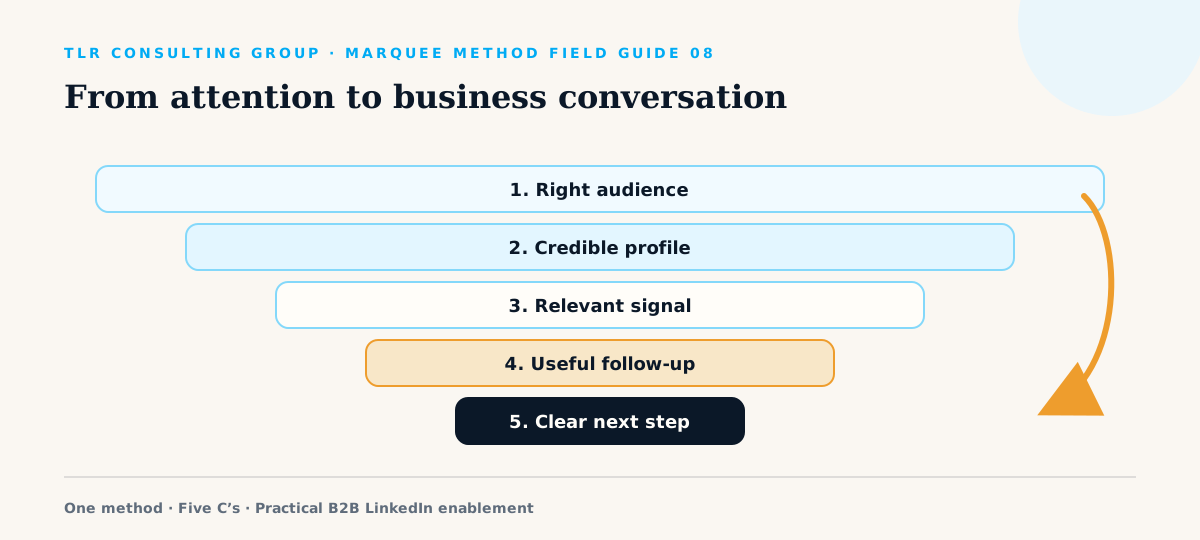
LinkedIn engagement but no leads usually means one of two things: the wrong people are engaging, or the path from interest to conversation is weak. The content may be visible and useful while the network, profile, offer, or follow-up prevents business movement.
- Separate engagement volume from buyer relevance.
- Make the profile continue the promise of the post.
- Treat intent signals differently.
- Use context-led follow-up instead of instant pitching.
Audit who is engaging
Classify recent engagement by role: target buyers, buying-group influencers, customers, partners, peers, employees, recruiters, and unrelated accounts. A post can perform well numerically while reaching almost no one who could enter or influence a buying process.
Audience mismatch often starts in connections and topic selection. If the network is built from creators in your field, creator peers will dominate the response. If the topic is “how to write on LinkedIn,” marketers may engage even when your buyers care about manufacturing risk or hotel labor.
Check the profile handoff
A high-intent reader often visits the author’s profile before connecting or replying. The headline, About section, experience, proof, and recent activity should reinforce the subject that earned attention. If the post is specific but the profile is a résumé or slogan, momentum stops.
Use the B2B profile optimization checklist to ensure the buyer can identify relevance and a sensible next step without decoding the company.
Distinguish weak and strong intent signals
A reaction is acknowledgment. A save suggests usefulness. A detailed comment reveals a concern or point of view. A profile visit, relevant connection, repeated engagement, direct question, or mention of an active initiative carries more context. Do not treat every action as permission for a sales message.
| Signal | Interpretation | Reasonable response |
|---|---|---|
| Reaction | Low context | No automated pitch; continue being useful |
| Substantive comment | Public interest | Reply thoughtfully and ask one relevant question |
| Repeat engagement | Growing familiarity | Connect with context if relevant |
| Direct question | Explicit interest | Answer, then offer an appropriate next step |
Create a conversion path for different intents
Not every post should ask for a meeting. Offer a ladder: a complete answer in the post, a related guide for deeper learning, a diagnostic for self-identification, a scorecard for evaluation, and a conversation for active buyers. Match the next step to the reader’s readiness.
Place calls to action where they help the reader. A post about low visibility can point to a diagnostic. A detailed implementation guide can point to a workshop. Relevance converts better than aggressive frequency.
Build a context-led follow-up habit
Use the idea or question behind the engagement as your reason to follow up. “Your point about adoption fading after launch is one we see often. Is the constraint manager reinforcement or employee confidence?” gives the recipient something useful to answer. “Thanks for liking my post. Book a demo” asks for value before earning it.
Track meaningful conversations as well as lead forms. LinkedIn can influence buying groups before a hand raise, including people outside the obvious sales contact. The 2025 Edelman–LinkedIn research on hidden buyers describes the role of thought leadership with “hidden buyers.”
Classify engagement before acting
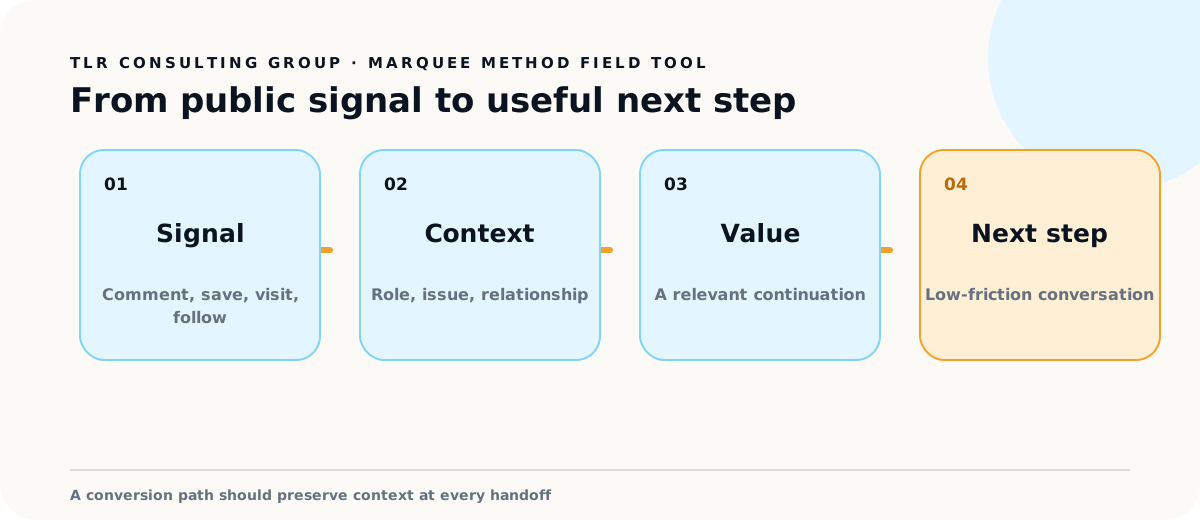
A reaction is a light signal. A detailed comment, repeat profile visit, relevant connection, direct question, or shared post carries more context. Create three levels: acknowledgment, interest, and intent. Define which evidence belongs in each level and what response is appropriate.
Most acknowledgment signals should receive no sales action. Interest signals may justify a useful public reply or profile visit. Intent signals may justify a direct message when the next step clearly follows from the interaction.
Audit the path after the post
Open the author’s profile, Featured section, company site, and relevant offer as a buyer would. Check whether the language and proof continue the same problem the post introduced. A strong post about production risk followed by a generic “transform your business” page breaks the path.
Can the buyer move from post to profile to proof to conversation without having to reinterpret who you help or why the issue matters? Repair the first point where the meaning changes.
Use a context-led follow-up
A useful message names the shared context, adds something the buyer can use, and offers an easy response. Example: “Your point about maintenance data ownership matches what we see in multi-site programs. We use a one-page decision map to clarify it. I can send it if useful.”
The message does not pretend a reaction is buying intent. It gives the recipient control. If the person does not respond, the team has learned that the signal was not strong enough or the continuation was not relevant enough.
Measure conversion by stage
Track target-audience engagement, relevant profile activity, inbound connections, direct conversations, meetings, and opportunity influence. LinkedIn’s current post analytics documentation provides profile viewers from a post, followers gained, saves, sends, and link visits where available. Use those measures to locate the break in the path.
The 2025 Edelman–LinkedIn B2B Thought Leadership Impact Report also shows why immediate lead capture is an incomplete goal. Many influential stakeholders consume thought leadership without direct sales interaction. Record account-level influence and internal sharing when the evidence exists.
Map the conversion path on one page
Choose one high-engagement post. Place the post, author profile, Featured proof, landing page, message, and sales next step in sequence. Under each surface, write the audience, problem, promise, proof, and action. Circle every point where the language, audience, or level of intent changes.
Repair the earliest break. If the post attracts peers rather than buyers, fix the topic or network before writing messages. If the profile lacks proof, fix credibility before adding a call to action. If the message makes a large ask from a light signal, reduce the step.
Run the repaired path for four weeks and review relevant profile activity, direct conversations, and meeting quality. The exercise turns vague “conversion” advice into a specific handoff problem.
Frequently asked questions
Why do my LinkedIn posts get likes but no sales?
Likes may come from peers or low-intent readers. Audit audience relevance, profile credibility, offer fit, and whether you have a respectful conversation path.
Should I message everyone who likes a post?
No. A reaction alone is weak context. Prioritize substantive comments, repeated relevant engagement, direct questions, and other clear signals.
What CTA works best on LinkedIn?
The best CTA matches intent: a question for discussion, a useful resource for learning, a diagnostic for evaluation, or a meeting for an active problem.
Research and method: This guide separates documented platform features and cited research from the operating recommendations used in The Marquee Method. LinkedIn analytics are estimates, research findings describe their stated samples, and platform features can change. Review the linked primary sources before implementing account-specific workflows.
Put it into practice
Find where the conversion path breaks.
Select your exact symptom and get a prioritized five-C diagnosis.
Run the Marquee Diagnostic