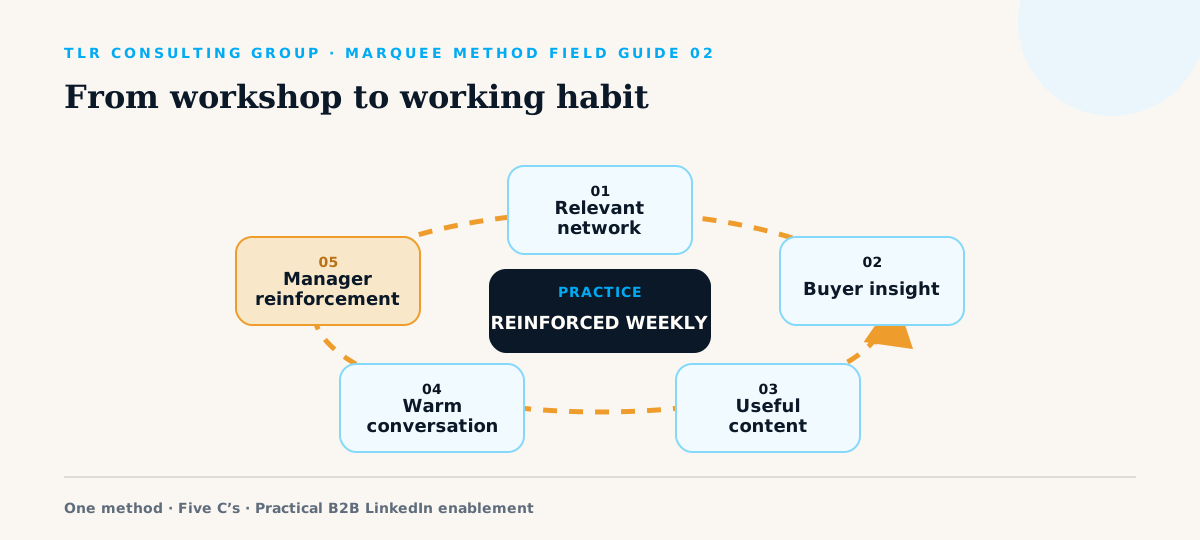
LinkedIn training for sales teams works when sellers change their weekly behavior. Platform features matter only when a rep knows who to connect with, what to say in public, how to recognize a warm signal, and how to turn attention into a useful business conversation.
- Train a buyer journey, not a list of features.
- Use role-specific practice with real accounts.
- Make managers part of reinforcement.
- Measure behavior and conversations before pipeline.
Why most LinkedIn sales training fades
A single workshop can create understanding, but understanding is not adoption. Sellers return to account reviews, forecasts, calls, and inboxes. If the new behavior has no place in the sales cadence, it becomes optional and disappears.
LinkedIn’s social-selling activity framework identifies familiar adoption hurdles: executive support, training, a clear plan, and early adopters. Training begins the implementation. Managers, practice, and reinforcement make the behavior last.
Could a manager observe the behavior in a weekly one-to-one? If not, the instruction is probably too abstract.
Teach the complete social-selling path
Salespeople do not need to become creators. They need a coherent path:
- Credibility: a profile that explains who they help and demonstrates relevant experience.
- Connections: a deliberate network of buyers, influencers, partners, and practitioners.
- Content: useful observations that create familiarity before outreach.
- Conversations: relevant comments and messages tied to context.
- Consistency: a routine light enough to repeat.
Skipping a step creates predictable problems. A weak profile reduces acceptance. An irrelevant network produces the wrong engagement. Content without conversation produces visibility without pipeline.
Build training around real sales work
Generic exercises feel safe and transfer poorly. Use live target-account lists, current buyer questions, actual objections, customer-approved stories, and the seller’s existing profile. A strong session might have each rep identify five relevant people, improve one profile proof point, draft one insight from a recent call, and write one context-led follow-up.
Keep the examples role-specific. An enterprise account executive, SDR, solutions engineer, and customer success manager each sees different parts of the buyer’s world. Their content and conversation starters should reflect that access.
- Real target accounts
- Current buyer questions
- Role-specific examples
- Live practice
- Peer feedback
- Manager follow-through
Install a weekly LinkedIn routine
A sustainable routine can fit into three short blocks: identify and connect with relevant people; add thoughtful comments where buyers already participate; publish or develop one useful idea. The exact minutes matter less than making the actions specific.
Managers can reinforce the routine without policing personal profiles. Ask: Which buyer did you learn from? Which public conversation created context? Which signal deserves a follow-up? Those questions connect LinkedIn activity to account strategy rather than vanity metrics.
Measure what the training can reasonably change
Track leading indicators for 30–60 days: profile completeness, relevant connections added, participation frequency, comments, posts, and messages sent with context. Then track response indicators: acceptance, replies, buyer-role audience, profile visits, and meetings influenced. Use LinkedIn’s member analytics guide to understand the available member-level analytics.
Pipeline is the destination, but asking a two-hour workshop to prove revenue creates bad incentives. Measure skill first, habit second, conversation third, and commercial influence fourth. Compare the Workshop, LinkedIn Activation Sprint, and Marquee Program by the amount of application and reinforcement the team needs.
Turn the curriculum into observable behavior
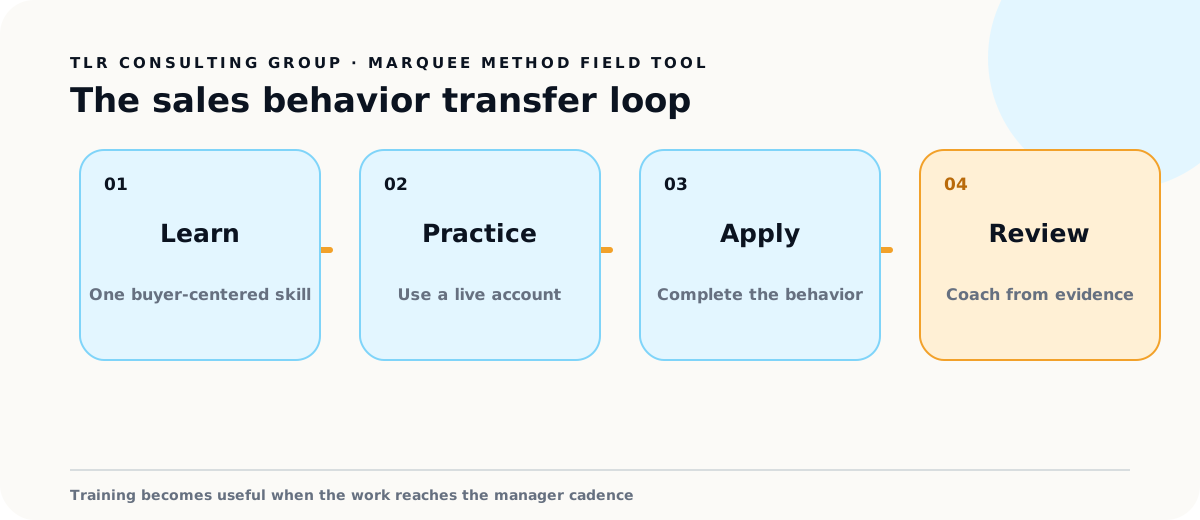
“Use LinkedIn better” gives a manager nothing to coach. Each lesson should end with a behavior that can be observed and reviewed. A credibility lesson ends with an updated first screen and proof section. A networking lesson ends with a defined account list and relevant invitations. A content lesson ends with an idea drawn from customer work. A conversation lesson ends with a context-led follow-up.
Write a behavior specification for each skill: when the seller should use it, what good looks like, what evidence it creates, and which mistakes to avoid. That specification becomes the common language for training, practice, and manager review.
Run practice against live accounts
Use accounts the seller already owns, with appropriate care for confidential information. Ask the seller to map the visible buying group, identify a relevant signal, choose a credible contribution, and decide whether a public comment, invitation, message, or no action is the right response.
| Situation | Practice task | Coach checks |
|---|---|---|
| New target account | Map five relevant roles | Role coverage and relevance |
| Buyer posts a problem | Draft a useful public comment | Specificity and no pitch |
| Warm public exchange | Write the next message | Context, value, easy response |
| Low acceptance | Audit sample and profile | Audience fit before wording |
Build a four-week reinforcement plan
Week one focuses on credibility and account selection. Week two adds network and commenting practice. Week three develops one useful point of view from active sales conversations. Week four connects warm signals to appropriate follow-up. Managers review one example per seller each week, then name a specific improvement.
Retrieval, practice, feedback, and spaced reinforcement give training a better chance of surviving the workshop. CIPD’s evidence review on effective learning and reinforcement summarizes evidence for active participation and reinforcement in learning design. The program does not need elaborate gamification. It needs repeated use in the environment where the skill matters.
Measure skill, habit, and sales evidence separately
Skill measures whether a seller can perform the behavior. Habit measures whether it happens in the normal week. Sales evidence measures whether the behavior improves access or conversation quality. Keep those layers separate so a strong learner is not mislabeled a commercial success after one class, and a strong seller is not credited to training without evidence.
Use invitation acceptance, relevant network growth, buyer-role audience, substantive replies, and meetings influenced as downstream measures. LinkedIn’s social-selling framework includes profile, search, insights, messaging, connection acceptance, and relationship activity. LinkedIn now says SSI alone no longer reflects the modern sales environment, so use it as a behavior indicator rather than a revenue score.
Give managers a weekly coaching card
Use five questions in the sales cadence. Which buyer or account did you learn from? What public signal changed your account view? Which contribution did you make? What response deserves a next step? What will you repeat next week? The seller brings one example, not a dashboard.
The manager checks relevance, judgment, and execution. A weak comment gets one precise improvement. A useful message becomes an anonymized team example. A signal with no appropriate next step is still a successful decision. This coaching card keeps the work connected to account strategy and prevents raw activity from becoming the objective.
After four weeks, review whether the questions improve account knowledge and conversation quality. Remove any question that produces reporting theater instead of a better sales decision.
Frequently asked questions
How long should LinkedIn sales training last?
A focused workshop can introduce and practice the system in 90 minutes to half a day. Lasting adoption usually requires several weeks of reinforcement, manager support, and application.
Should sales teams post every day?
No. Useful weekly activity beats an unsustainable daily quota. The right frequency depends on capacity, audience, and sales motion.
Is LinkedIn training only for SDRs?
No. Executives, account executives, technical experts, customer success, and marketing all contribute different forms of credibility and access.
Research and method: This guide separates documented platform features and cited research from the operating recommendations used in The Marquee Method. LinkedIn analytics are estimates, research findings describe their stated samples, and platform features can change. Review the linked primary sources before implementing account-specific workflows.
Put it into practice
Choose the right path for your sales team.
Start with a focused Workshop, pilot the full method through the LinkedIn Activation Sprint, or install it across teams through The Marquee Program.
Compare engagement paths