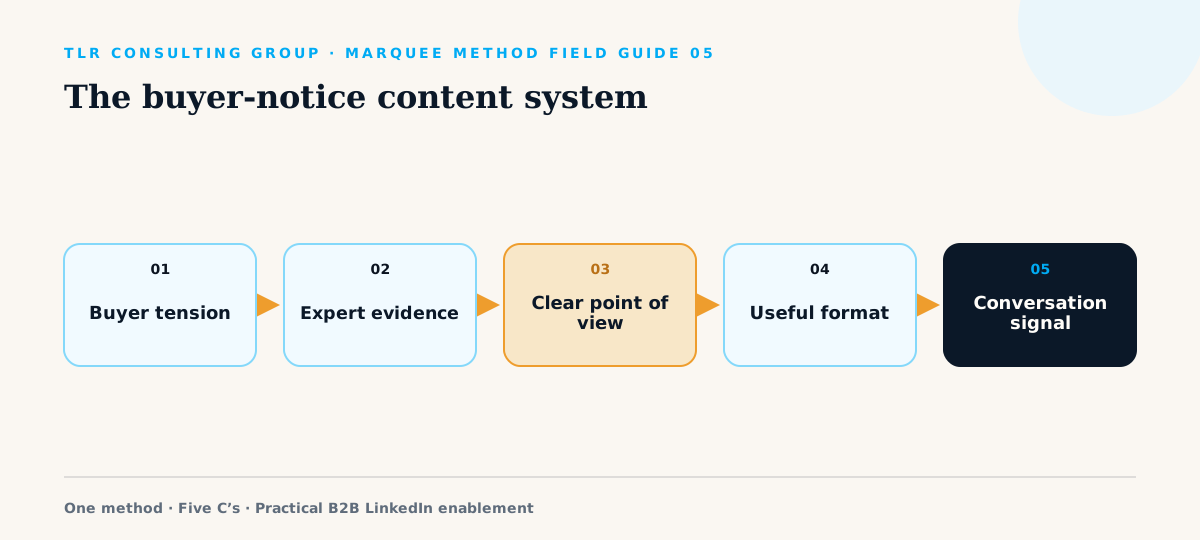
A B2B LinkedIn content strategy should help the right buyers recognize your expertise before they need a vendor. The strategy turns the company’s access, evidence, and judgment into useful public ideas, then connects those ideas to a defined audience and business purpose.
- Anchor content in buyer tensions and decisions.
- Source ideas from employees closest to the work.
- Use a portfolio of purposes, not a random mix of formats.
- Treat comments and direct conversations as part of distribution.
Choose the buyer problem before the content pillar
Traditional content pillars often describe the company: product, culture, news, and customer stories. Buyer-centered pillars focus on the decisions and tensions the audience handles. A manufacturer might cover modernization tradeoffs, production risk, workforce constraints, and maintenance economics instead of repeating “our solutions.”
Interview sales, customer success, executives, and technical experts. Ask which questions appear before a deal, which assumptions cause mistakes, and which tradeoffs buyers underestimate. Those answers create a durable editorial territory because they come from recurring market friction.
Build an evidence-rich idea supply
The best B2B ideas usually begin with access competitors do not have: patterns across customer conversations, implementation lessons, proprietary data, operational experience, or a contrarian decision the company can explain. Support each claim with an example, observation, data point, demonstration, or qualified expert judgment.
The 2024 Edelman–LinkedIn B2B thought-leadership research emphasizes expertise and distinct perspective. Evidence keeps the content from becoming interchangeable and shows buyers why your team has earned the right to speak.
- Customer question
- Observed pattern
- Useful distinction
- Operator example
- Evidence source
- Clear implication
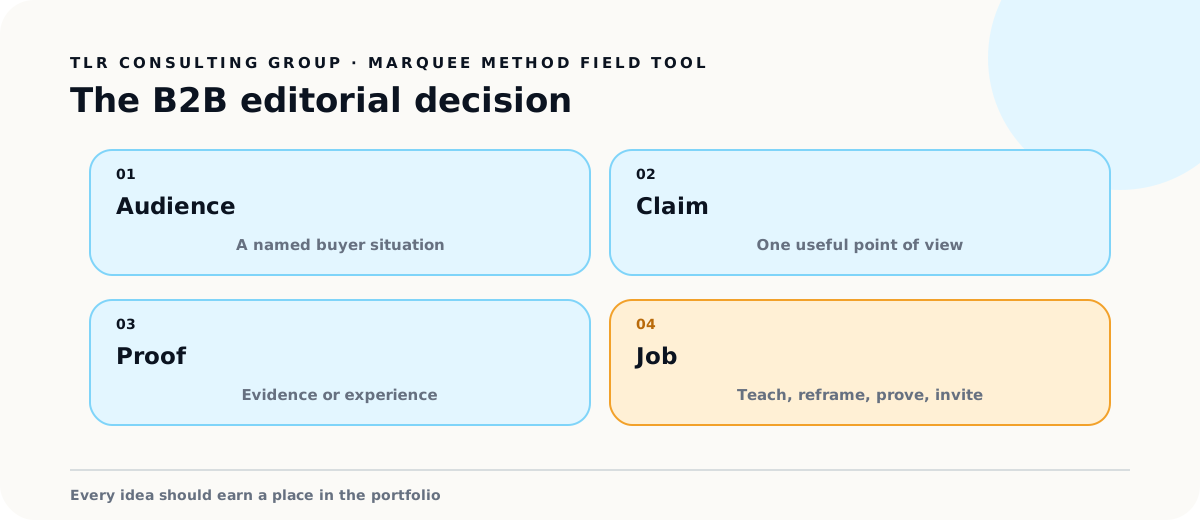
Use four editorial jobs
| Editorial job | Buyer need | Example |
|---|---|---|
| Teach | Understand a problem | A diagnostic checklist or practical explainer |
| Reframe | See a decision differently | A counterintuitive tradeoff with evidence |
| Prove | Reduce perceived risk | A lesson, demonstration, or customer-approved case |
| Invite | Participate in the issue | A precise question grounded in a real tension |
A healthy month includes all four. “Teach” without “prove” can feel theoretical. “Prove” without “teach” becomes promotion. “Invite” without a real point of view becomes engagement bait.
Design for people and feed relevance
LinkedIn says feed ranking uses hundreds of signals about the post, author, network, and activity. It also evaluates content quality, freshness, conversations, and member behavior. See LinkedIn’s explanation of how the feed ranks content and LinkedIn’s relevance and member-experience guidance. Clear, relevant writing gives both readers and the system a useful signal.
Write the opening so the intended reader can recognize the problem. Keep one central idea. Use concrete nouns, short paragraphs, and a useful payoff. Avoid automated comment schemes and generic prompts; LinkedIn’s March 2026 feed update says LinkedIn is working to reduce inauthentic engagement and repetitive low-substance content.
Connect content to conversation and measurement
Distribution starts with the author’s relevant network and continues through thoughtful participation. Reply to substantive comments. Equip subject-matter experts to add context, not copy reactions. Use direct messages only when a public interaction or shared context makes the next step relevant.
Measure buyer-role audience, saves, substantive comments, profile views, relevant inbound connections, direct replies, and opportunities influenced. When performance is weak, diagnose the path before increasing volume. The low post views guide and engagement-without-leads guide separate different failure modes.
Write an audience problem map
List the recurring decisions your buyers make, the risks they manage, the tradeoffs they debate, and the questions they ask before they are ready to speak with sales. Add hidden stakeholders whose concerns can stall agreement. This map supplies a deeper editorial foundation than a list of product categories.
For each problem, record what the audience already believes, what your experts have observed, which evidence is available, and what the reader can do with the idea. The gap between the common belief and the earned observation is often the strongest source of thought leadership.
Build a balanced evidence portfolio
| Evidence type | Best use | Quality check |
|---|---|---|
| Operating example | Show how a decision works | Specific enough to learn from |
| Customer-approved case | Reduce implementation risk | Context and limits included |
| External research | Support a market claim | Primary source and date |
| Data from the company | Reveal an original pattern | Method and sample disclosed |
Label anecdotes as anecdotes. Name the source and date of research. Avoid turning a platform observation into a universal law. These habits make content more useful and easier for buyers to share internally.
Use one worked editorial example
A software company wants to discuss AI adoption. “Five benefits of AI” is broad and familiar. The team interviews implementation leaders and discovers that permission design delays more pilots than model selection. The stronger idea becomes: “Why permission mapping belongs in week one of an enterprise AI pilot.”
The post teaches a decision, uses evidence from delivery work, addresses security and operations stakeholders, and creates a useful next step. A follow-on document can provide the permission-mapping checklist. Sales teams can use the idea when the same issue appears in account conversations.
Review content as a portfolio
LinkedIn’s current feed-ranking explanation says LinkedIn considers the post context together with profile, network, and activity signals. LinkedIn’s relevance guidance also points to quality, freshness, conversations, and member behavior. These statements support clear relevance and real discussion. They do not justify rigid tricks about length, posting time, or punctuation.
Each month, review audience mix, saves, sends, substantive comments, profile activity, and conversation evidence by editorial job. Keep topics that create useful recognition. Improve ideas that reach the right people but fail to earn a response. Retire themes that attract a broad, irrelevant audience.
Run the monthly editorial council
Bring one representative from marketing, sales, customer success, product or delivery, and leadership. Review five buyer questions, three recent operating lessons, two external research findings, and one company proof point that can be shared. Choose the ideas with the clearest audience value and strongest evidence.
Assign an author based on earned access. The person closest to the decision should supply the judgment; the editorial team supplies research, structure, editing, and distribution support. Record the intended reader, claim, proof, format, reviewer, and publication window.
At the next council, review whether the idea reached the intended audience and what the market taught the team. Feed substantive questions back into sales enablement and future content.
Frequently asked questions
How often should a B2B company post on LinkedIn?
Use a cadence your experts can sustain. Two or three strong employee or executive posts per week may create more value than daily generic company content.
What are good B2B LinkedIn content pillars?
Use buyer-centered territories such as recurring decisions, risks, tradeoffs, implementation lessons, and future implications. Company categories alone rarely produce useful ideas.
Should every LinkedIn post include a call to action?
No. Many posts should deliver a complete idea. Use a next step only when it matches the reader’s intent.
Research and method: This guide separates documented platform features and cited research from the operating recommendations used in The Marquee Method. LinkedIn analytics are estimates, research findings describe their stated samples, and platform features can change. Review the linked primary sources before implementing account-specific workflows.
Put it into practice
Turn company expertise into an editorial system.
The Marquee Program trains your people to find, shape, publish, and discuss ideas buyers care about.
Build the system