A LinkedIn employee advocacy policy should reduce uncertainty. Employees need to know what they can discuss, what requires review, what is prohibited, and who can answer a question quickly. A policy that only lists risks may protect on paper while silencing the expertise the program was meant to reveal.
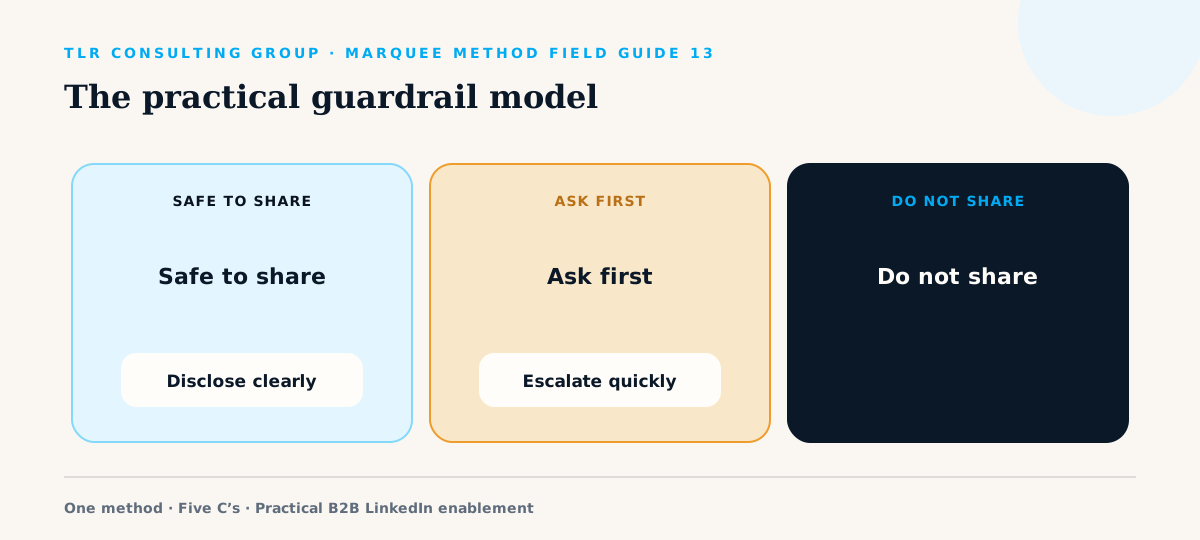
- Use three clear content zones: safe, ask first, prohibited.
- Separate personal opinion from official representation.
- Include customer permission, claims, disclosure, and AI.
- Pair policy acknowledgment with scenario practice.
Begin with purpose and scope
Explain why the company supports professional participation: sharing expertise, learning in public, strengthening customer relationships, recruiting, and improving market understanding. Name who the policy applies to and which channels it covers.
State that participation must comply with employment agreements, confidentiality duties, applicable regulation, and platform rules. This guide is operational, not legal advice; qualified counsel should review the final policy for your jurisdiction and industry.
Define three content zones
| Zone | Meaning | Examples |
|---|---|---|
| Safe to share | Employees may use judgment within training | Public industry observations, approved events, personal lessons without confidential detail |
| Ask first | Review is required | Customer stories, performance claims, unreleased product detail, sensitive incident lessons |
| Do not share | Prohibited | Confidential information, material nonpublic information, personal data, discriminatory or harassing content |
Use examples from the company’s actual work. “Do not disclose confidential information” is necessary but insufficient; employees need to recognize confidentiality in a photo, dashboard crop, plant tour, or project anecdote.
Cover the high-risk subjects explicitly
Address customer and partner permission, financial and performance claims, intellectual property, product roadmaps, competitor discussion, personal data, endorsements, regulated subjects, crisis communications, and media inquiries. Define when an employee must identify their employer or disclose a relationship.
Make correction behavior explicit. If an employee posts inaccurate or sensitive information, they should know whether to edit, remove, capture a record, and notify communications, legal, security, or management.
Add practical AI rules
Employees may use AI to organize notes, generate questions, or improve clarity only within approved tools and data rules. Never paste customer, employee, proprietary, or sensitive company information into an unapproved system. Require the human author to verify facts, sources, claims, permissions, and final tone.
Prohibit undisclosed fake testimonials, fabricated experience, impersonation, mass automated engagement, and unreviewed generated claims. LinkedIn’s March 2026 feed update notes LinkedIn’s action against automated comments and inauthentic engagement, which reinforces the reputational case for human participation.
Train scenarios and build a fast escalation path
A policy becomes useful through practice. Give teams short scenarios: a customer congratulates them publicly; a photo shows a whiteboard; a prospect asks about a future feature; an employee wants to critique an industry practice; a colleague asks AI to rewrite call notes. Discuss the zone and response.
Publish one designated contact or channel with a response-time expectation. Review the policy at least annually and after material regulatory, platform, or company changes. Pair governance with the broader employee advocacy program guide so safety supports capability.
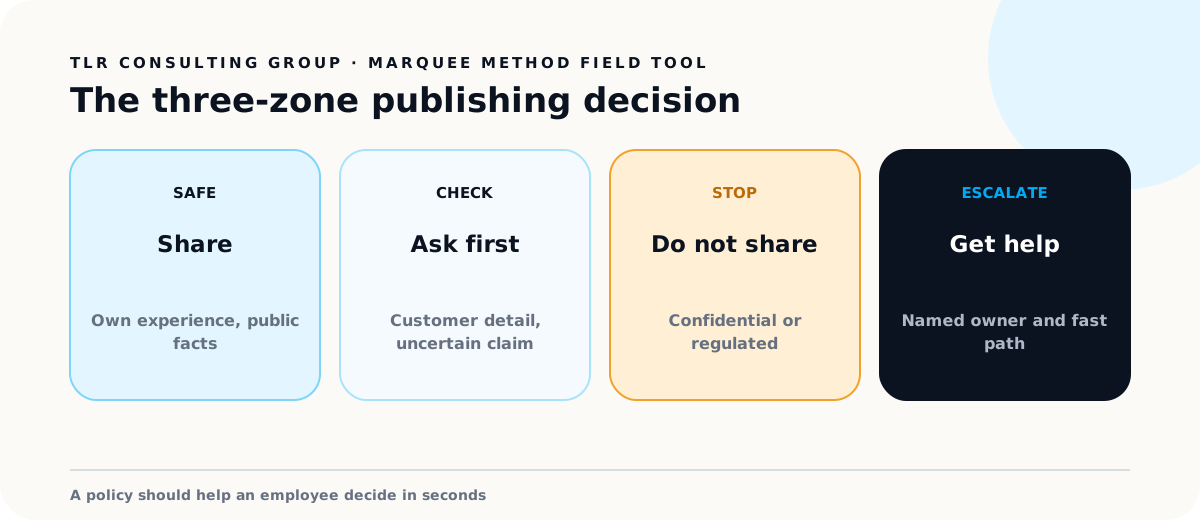
Write for the moment of decision
Most employees will not consult a long policy while drafting a post. Give them a one-page decision guide with three zones: safe to share, ask first, and do not share. Add the name and response time of the person who handles questions.
The full policy can carry legal detail. The daily tool should use realistic situations from sales, engineering, customer success, recruiting, and leadership. Employees need to recognize the boundary in their own work.
Include the risks that matter
| Area | Policy question | Practical example |
|---|---|---|
| Confidentiality | Is the information public? | Unannounced customer project |
| Claims | Can the statement be supported? | Performance or savings claim |
| Disclosure | Is employment relevant to the endorsement? | Praising the company’s product |
| Permission | Can the person or customer be identified? | Photo, quote, or logo |
| AI use | Was sensitive information entered? | Customer notes in a public tool |
Add a responsible AI workflow
Define approved tools, prohibited inputs, human review, fact checking, source handling, and accountability. Employees should never enter confidential customer, employee, product, or deal information into an unapproved system. Generated copy still belongs to the person who publishes it.
NIST’s Generative AI Risk Management Profile organizes generative AI risk work around governance, mapping, measurement, and management. A practical advocacy policy can borrow that logic: define ownership, map use cases, test risks, and manage exceptions.
Teach disclosure with examples
The FTC’s employee endorsement guidance says employees should disclose their relationship when endorsing their employer’s products and that the employment listing on a profile may not be enough. The policy should show clear language that fits the company and the post, then route legal questions to qualified counsel.
Test the policy in training. Give employees ten short scenarios and ask them to choose safe, ask first, or restricted. Review disagreements. Those disagreements reveal where the wording needs work.
Run a scenario-based policy test
Create scenarios from actual work: an employee wants to name a customer, share a conference photo, discuss an unreleased feature, praise the company’s product, paste notes into an AI tool, comment on a competitor, or describe a performance result. Include details that make the decision realistic.
Ask employees to classify each scenario as safe, ask first, or restricted and name the reason. Measure agreement and time to decision. Low agreement means the policy is unclear. Slow decisions mean the daily tool is too complex.
Review disputed scenarios with legal, security, communications, and employees. Update the examples and escalation route. Retest after material policy, platform, product, or regulatory changes. A policy earns trust when it helps people make sound decisions quickly.
Frequently asked questions
What should an employee advocacy policy include?
Include purpose, scope, confidentiality, customer permission, claims, disclosures, conduct, intellectual property, privacy, AI, corrections, escalation, and practical examples.
Should legal approve every employee post?
Usually no. Use training and clear low-risk zones for routine participation, with focused review for sensitive, regulated, or customer-specific content.
Is a social media policy the same as an advocacy policy?
They can overlap. A social media policy often emphasizes risk and conduct; an advocacy policy also explains supported participation, workflows, examples, and enablement.
Research and method: This guide separates documented platform features and cited research from the operating recommendations used in The Marquee Method. LinkedIn analytics are estimates, research findings describe their stated samples, and platform features can change. Review the linked primary sources before implementing account-specific workflows.
Put it into practice
Pair clear guardrails with real capability.
The Marquee Program builds governance, skills, routines, and measurement into one company-wide LinkedIn system.
Explore The Marquee Program